
Subtotal ₹0.00

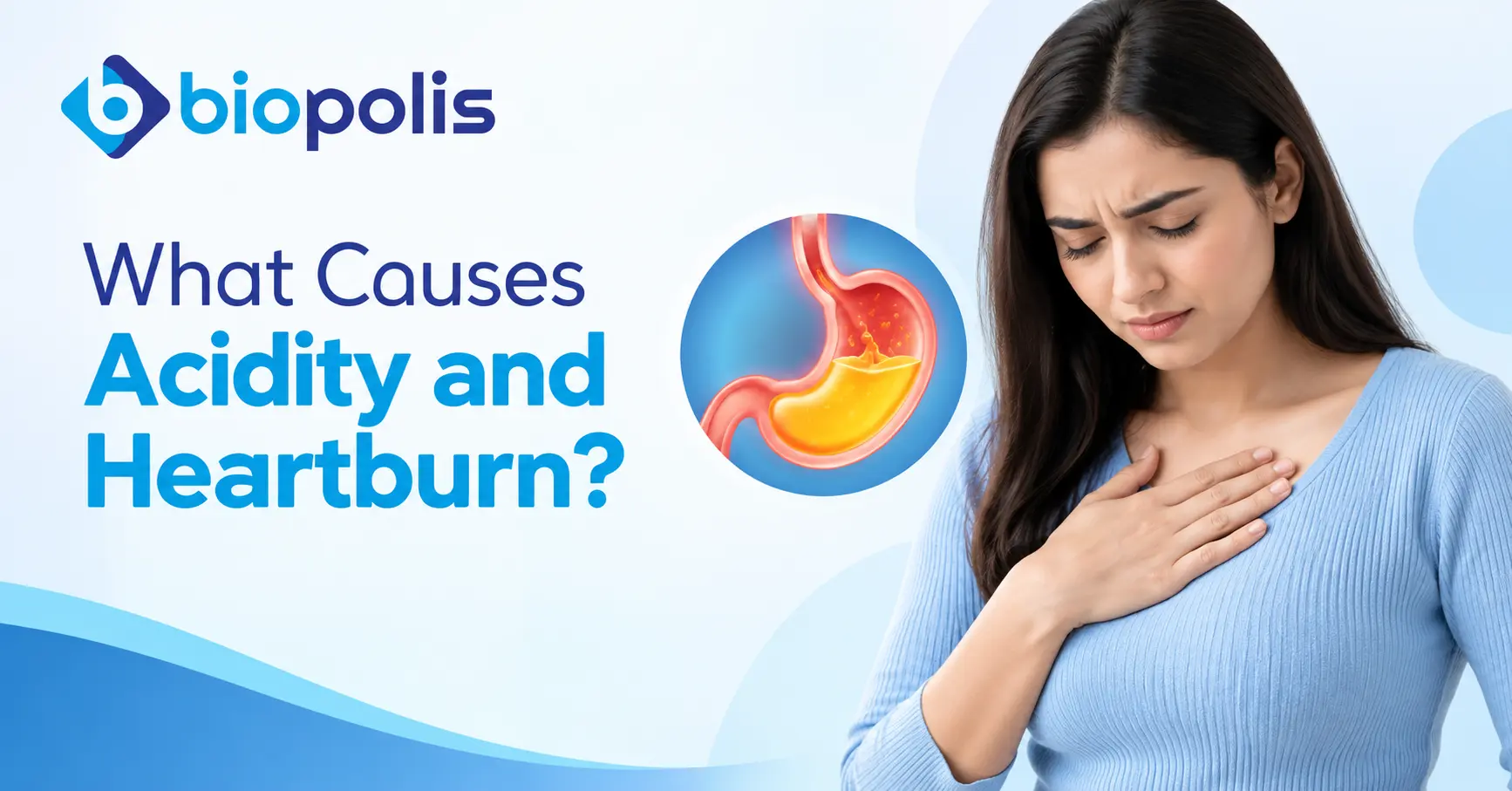
Acidity and heartburn are common digestive complaints. They may cause a burning feeling in the chest or upper abdomen, a sour taste in the mouth, or discomfort after eating.
These symptoms often occur when stomach contents move back into the food pipe, also called the oesophagus. This is known as acid reflux.
Occasional heartburn is common, but frequent symptoms may need medical attention.
What Causes Heartburn?
A ring of muscle between the food pipe and stomach normally helps keep stomach contents from moving upward.
When this muscle relaxes at the wrong time or becomes weak, stomach contents can flow back into the food pipe. The stomach lining can handle acid better than the food pipe, so this may cause a burning sensation.
Common Triggers of Acidity
Several everyday factors may trigger or worsen heartburn.
1. Large Meals
Eating a large meal can increase pressure inside the stomach. This may make reflux more likely.
Smaller meals may be more comfortable for people who often experience heartburn.
2. Eating Close to Bedtime
Lying down soon after eating may make it easier for stomach contents to move upward.
Leaving some time between dinner and bedtime may help reduce symptoms.
3. Certain Foods
Spicy foods, fatty foods, chocolate, coffee, and other foods may trigger symptoms in some people.
Triggers are not the same for everyone. Keeping track of foods that repeatedly cause discomfort can help identify personal triggers.
4. Being Overweight
Extra weight around the abdomen can increase pressure on the stomach and may contribute to reflux.
Maintaining a healthy weight can help reduce symptoms in some people.
5. Smoking
Smoking can affect the muscle that helps prevent stomach contents from moving back into the food pipe. It may therefore worsen reflux symptoms.
6. Certain Medicines
Some medicines may cause or worsen heartburn in certain people.
If symptoms begin after starting a medicine, speak with a healthcare professional before making any changes to treatment.
What Does Heartburn Feel Like?
Heartburn may cause:
- A burning feeling behind the breastbone
- A sour or bitter taste in the mouth
- Food or liquid coming back into the mouth
- Upper abdominal discomfort
- Symptoms that become worse after meals or when lying down
Not everyone experiences all these symptoms.
How Can Acidity Be Reduced?
Simple lifestyle changes may help manage occasional heartburn.
Eat Smaller Meals
Avoid very large meals and eat slowly.
Avoid Personal Triggers
Notice which foods or drinks make symptoms worse and reduce them when needed.
Stay Upright After Eating
Try not to lie down immediately after meals.
Maintain a Healthy Weight
If overweight, gradual weight loss may help reduce reflux symptoms.
Avoid Smoking
Stopping smoking can benefit digestive health as well as overall health.
When Should Heartburn Be Checked?
Occasional heartburn may not be serious. However, frequent or persistent symptoms should be discussed with a healthcare professional.
Medical advice is especially important if heartburn occurs several times a week, keeps returning, or does not improve with lifestyle changes.
Seek urgent medical attention for chest pain that is severe, new, or accompanied by breathlessness, sweating, dizziness, or pain spreading to the arm, jaw, back, or shoulder. Not all chest pain is caused by acidity.
Other warning signs include difficulty swallowing, painful swallowing, repeated vomiting, vomiting blood, black stools, unexplained weight loss, or persistent loss of appetite.
Is Acidity the Same as Heartburn?
The terms are often used together, but they are not exactly the same.
Acid reflux refers to stomach contents moving back into the food pipe.
Heartburn is the burning sensation that may result from this reflux.
People often use the word “acidity” to describe symptoms related to acid reflux or indigestion.
What to Remember
Occasional heartburn is common and may be linked to large meals, certain foods, lying down soon after eating, smoking, or other factors.
Simple changes in eating and daily habits may help reduce symptoms. However, frequent or severe heartburn should not be ignored.
Persistent symptoms deserve proper evaluation so the cause can be identified and suitable treatment can be started.
Comments are closed