

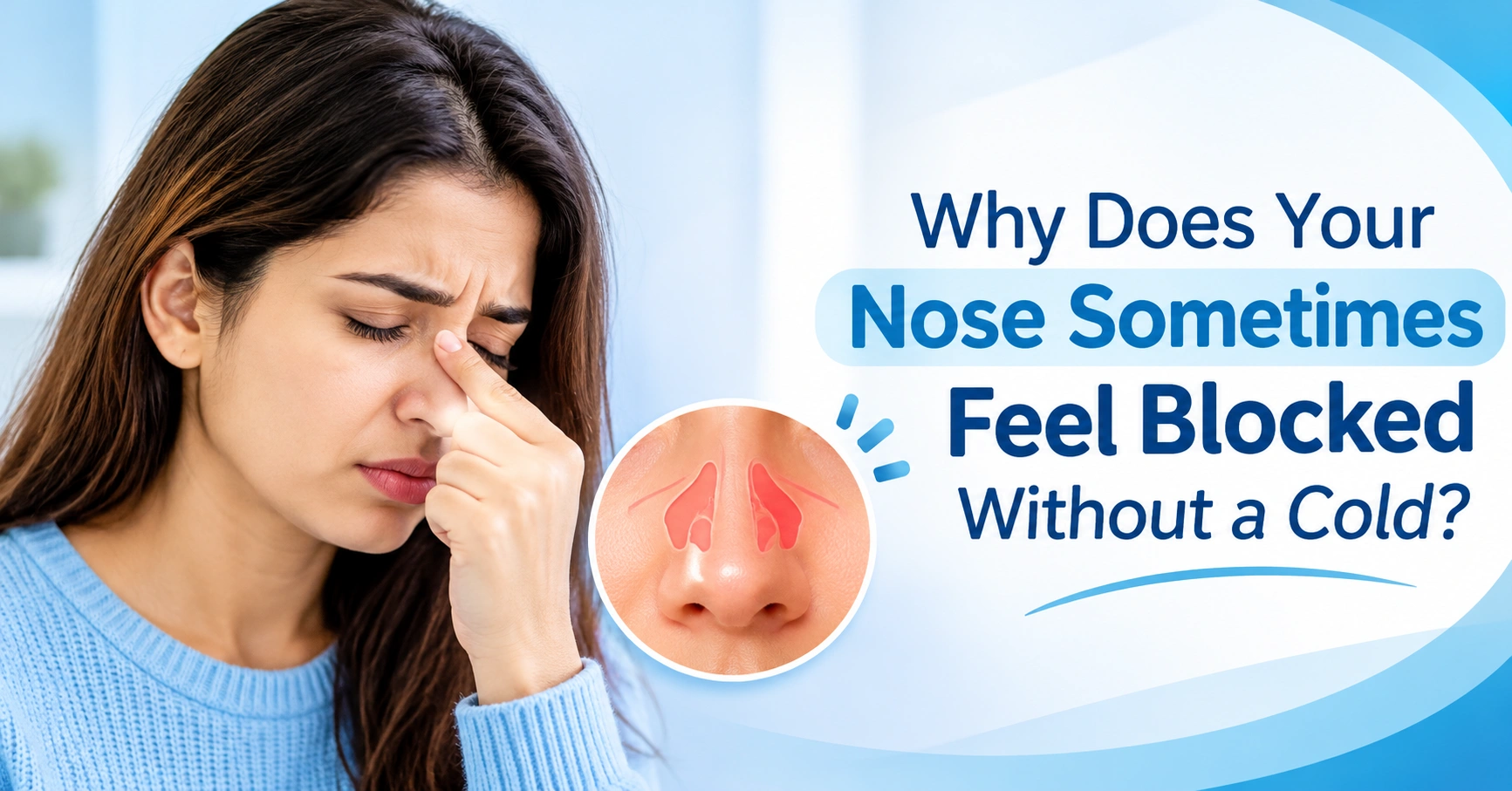
Have you ever felt like you cannot breathe freely through your nose, even when you are not sick?
A blocked nose is often linked with a cold, but a cold is not the only possible reason. Your nose can feel blocked because of allergies, dry air, irritants, changes in weather, or swelling inside the nasal passages.
Sometimes, the blockage is temporary and settles on its own. If it keeps returning, understanding the possible cause can help you manage it better.
Can Allergies Block Your Nose?
Allergies are a common reason for nasal blockage.
When your body reacts to substances such as dust, pollen, pet dander, or mold, the lining inside your nose can become swollen.
You may also notice sneezing, itching, watery eyes, or a runny nose.
Unlike a cold, allergies can continue for longer periods or return whenever you are exposed to a particular trigger.
Identifying and reducing exposure to the trigger can help control symptoms.
Can Dry Air Make Your Nose Feel Blocked?
Dry air can affect the lining inside your nose.
When the nasal passages become dry and irritated, they may feel uncomfortable or congested. This can happen during dry weather or when spending a lot of time in air-conditioned rooms.
Keeping the surrounding air comfortable and drinking enough fluids can help reduce dryness for some people.
Can Weather Changes Affect Nasal Breathing?
Changes in temperature and humidity can sometimes affect the nose.
Moving between very warm and cool environments may cause the nasal passages to react. Some people may notice more congestion during particular seasons or weather conditions.
This does not necessarily mean you have an infection.
If you notice a pattern, keeping track of when the blockage occurs can help identify possible triggers.
Can Dust and Strong Smells Cause Nasal Blockage?
Your nose helps protect the body from particles and irritants in the air.
Dust, smoke, perfumes, cleaning products, and other strong smells can irritate the nasal passages in some people.
This irritation can lead to swelling and a blocked feeling, even without an infection.
Reducing exposure to known irritants may help prevent repeated symptoms.
Could a Deviated Nasal Septum Cause Blockage?
The septum is the structure that separates the two sides of your nose.
If it is not positioned straight, one nasal passage may be narrower than the other. This can make breathing through the nose more difficult.
Some people are born with a deviated septum, while others develop it after an injury.
A blocked feeling that is mainly present on one side and continues for a long time may need medical evaluation.
Can Sinus Problems Cause a Blocked Nose?
Sinus problems can sometimes cause nasal congestion.
You may also experience facial pressure, headache, thick nasal discharge, or reduced sense of smell.
Sinus symptoms can have different causes, so persistent blockage should not automatically be treated as a bacterial infection.
A healthcare professional can help determine what may be causing the symptoms.
Can Nasal Sprays Cause More Blockage?
Some decongestant nasal sprays can provide short-term relief from congestion.
However, using certain sprays for longer than recommended can cause congestion to return or become worse after the medicine wears off.
Always follow the instructions on the product or advice given by your healthcare professional.
If you need a nasal spray frequently, it is better to discuss the ongoing blockage with a healthcare professional.
When Should You Get a Blocked Nose Checked?
Occasional nasal blockage is usually not a cause for concern.
However, medical advice is important when the blockage continues for a long time, keeps returning, or interferes with sleep and daily activities.
You should also seek medical advice if blockage occurs with repeated nosebleeds, severe facial pain, high fever, breathing difficulty, or other concerning symptoms.
Persistent blockage on only one side also deserves evaluation.
What to Remember
A blocked nose does not always mean you have a cold.
Allergies, dry air, weather changes, irritants, sinus problems, and the structure of the nose can all affect nasal breathing.
Paying attention to when and how nasal blockage happens can help you understand its possible cause.
Comments are closed