

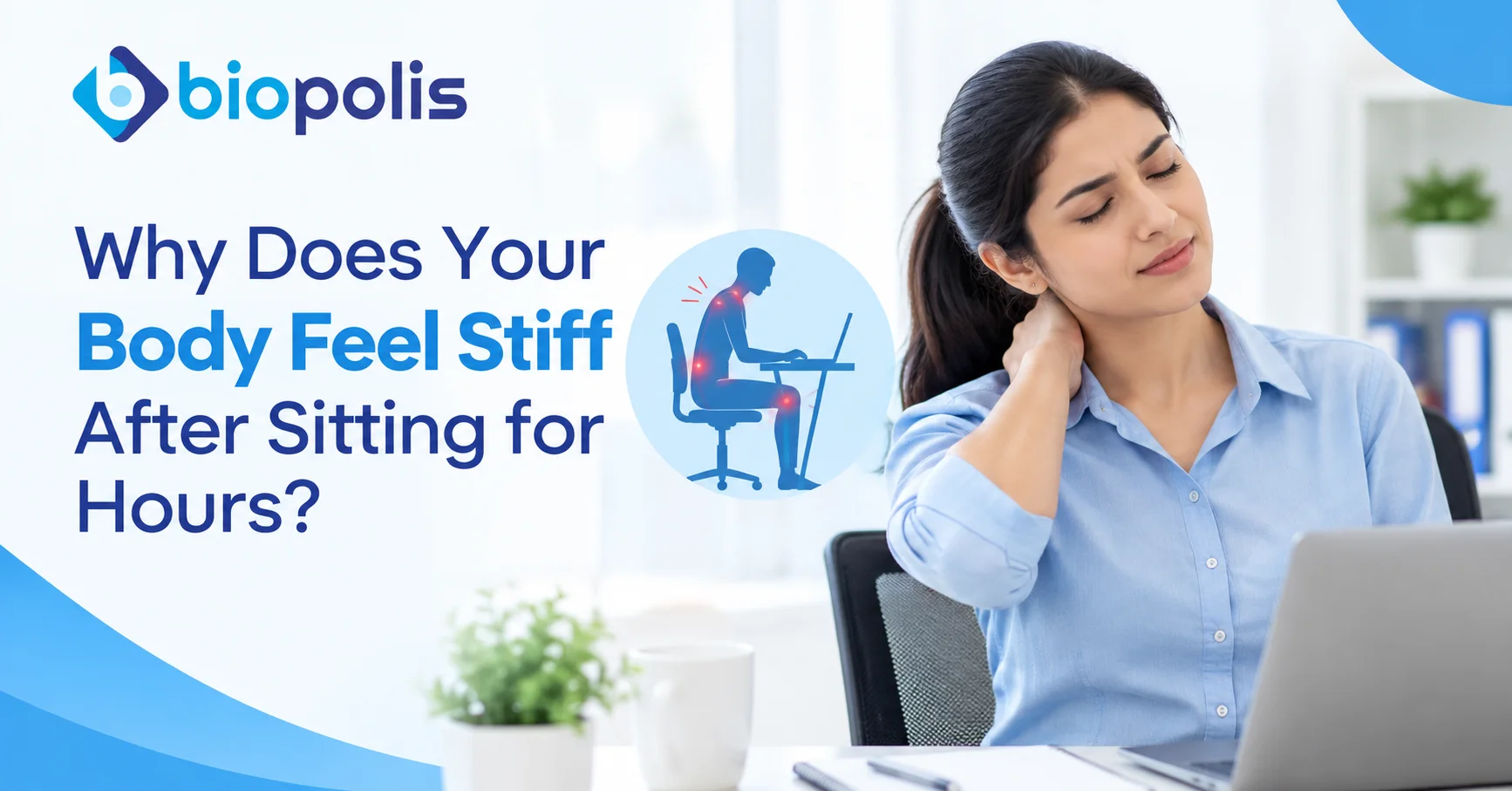
Have you ever stood up after sitting for several hours and felt like your body needed a few moments to loosen up?
Your back might feel tight. Your shoulders might feel heavy. Your hips and legs might not feel as flexible as they did earlier in the day.
This kind of stiffness is common, especially when you spend long periods sitting at a desk, working on a computer, travelling, studying, or watching television.
The good news is that regular movement throughout the day can help reduce the effects of prolonged sitting and keep your body more comfortable.
What Happens to Your Body When You Sit for a Long Time?
Your body is designed to move regularly. When you stay in one position for hours, several muscles remain in the same position for an extended period.
Some muscles stay shortened while others remain stretched or inactive. Your joints also move less than they would during normal daily activities.
This reduced movement can make your body feel stiff when you finally stand up or change position.
The feeling is often most noticeable in areas such as:
- Neck
- Shoulders
- Lower back
- Hips
- Knees
- Legs
Stiffness does not always mean that something is wrong with your muscles or joints. Sometimes, your body simply needs movement after being in one position for too long.
Why Does Your Back Feel Stiff After Sitting?
The lower back often takes much of the load when you sit for long periods.
Your sitting position also matters. Leaning forward toward a computer, sitting without enough back support, or frequently slouching can place additional stress on the muscles around your back.
When you stay in that position for a long time, your back can feel tight or uncomfortable when you stand.
Changing positions regularly can help prevent your back from staying in one posture for too long.
What About Your Neck and Shoulders?
Long hours at a computer or looking down at a phone can also affect your neck and shoulders.
When your head stays forward for an extended period, the muscles around your neck and upper back continue working to support it.
This can contribute to muscle fatigue, tightness, or stiffness.
You might notice this more at the end of a workday or after several hours of screen use.
Taking short movement breaks gives these muscles a chance to relax and change position.
Can Sitting Affect Your Hips and Legs?
Yes. Sitting keeps your hips and knees bent for an extended period.
After several hours, you might notice tightness when you stand, walk, or stretch your legs.
Your legs also experience less movement while you sit. Getting up and walking around regularly helps bring movement back into your routine.
Even a short walk around your home or workplace can break up long periods of sitting.
Is Good Posture Enough?
Good posture is helpful, but staying in the same position for too long is still not ideal.
There is no single sitting position that you need to maintain for hours.
Instead, think about changing positions regularly.
You can sit upright for some time, adjust your position, stand for a while, and walk around when possible.
Movement matters just as much as your sitting position.
How Often Should You Move?
There is no need to wait until your body starts feeling stiff before you move.
Try building small movement breaks into your day.
For example, you can:
- Stand up between tasks.
- Walk while taking a phone call.
- Stretch gently after working for a long period.
- Walk around during short breaks.
- Change your sitting position regularly.
- Take the stairs when practical.
- Avoid spending your entire break sitting in the same place.
These small changes can make a long sitting day more active.
What Simple Stretches Can You Try?
Gentle stretching can help your body move after a long period of sitting.
You can try slowly rolling your shoulders, gently turning your neck from side to side, extending your legs, or standing and reaching your arms overhead.
The movements should feel comfortable rather than painful.
There is no need to force a stretch. Slow and controlled movements are enough for a simple break from sitting.
If a particular movement causes pain, stop it rather than pushing through the discomfort.
Does Regular Exercise Help?
Daily movement and regular exercise both have a role.
Walking, cycling, swimming, strength exercises, yoga, and other forms of physical activity can help keep your muscles and joints moving.
However, exercising once a day does not completely replace movement during the rest of the day.
For example, someone can exercise for 30 minutes and then sit for another eight hours without much movement.
Breaking up long sitting periods still matters.
Think of exercise as planned physical activity and movement breaks as small opportunities to stay active throughout the day.
When Should Stiffness Be Checked?
Occasional stiffness after sitting for a long time is common.
However, persistent or severe stiffness deserves attention, especially when it comes with other symptoms.
Speak with a healthcare professional if stiffness:
- Continues even after you start moving
- Keeps getting worse
- Limits your normal activities
- Comes with significant pain
- Is associated with swelling or redness
- Follows an injury
- Comes with numbness or weakness
These symptoms can have different causes, so proper evaluation is important.
Make Movement Part of Your Day
You do not need a complicated routine to reduce the effects of prolonged sitting.
Start with simple changes.
Stand up. Walk around. Stretch gently. Change your position. Give your body regular opportunities to move.
If your work requires several hours at a desk, consider setting reminders to take short movement breaks. Keep frequently used items within reach, but avoid arranging your workspace so that you never need to get up.
Your body does not expect you to sit perfectly still for hours.
Regular movement throughout the day can help you feel more comfortable, flexible, and ready for whatever comes next.
Comments are closed