

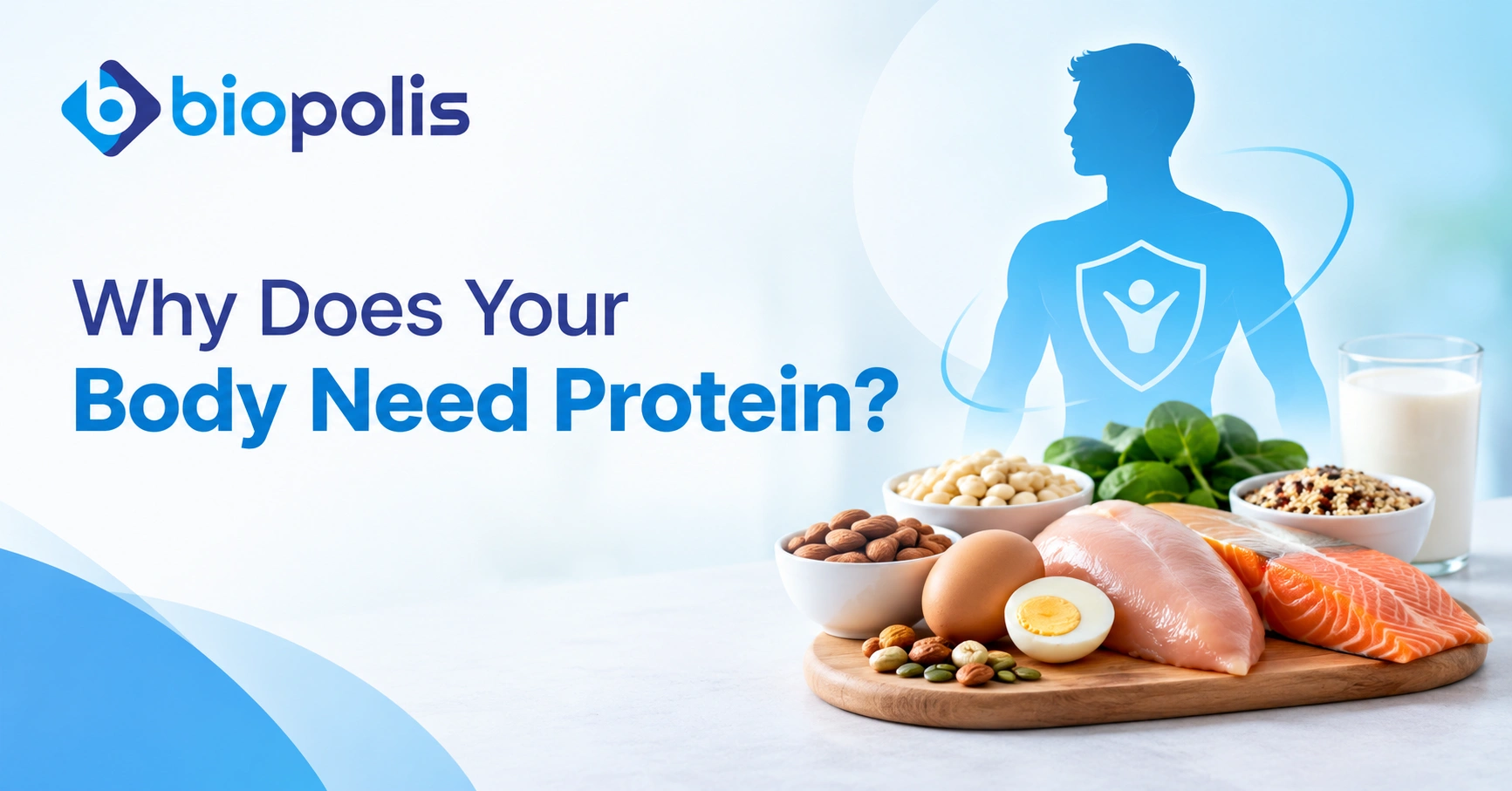
Protein is often associated with muscles, but its role in the body goes far beyond building strength.
Every day, the body uses protein to build, repair, and maintain different tissues and support many important body functions.
From muscles and skin to enzymes and hormones, protein is involved in many processes that keep the body working normally.
What Is Protein?
Protein is a nutrient made up of smaller building blocks called amino acids.
The body uses amino acids to build and repair tissues and produce many important substances.
Some amino acids can be made by the body, while others need to come from food.
This is why getting enough protein from a balanced diet is important.
Why Does Your Body Need Protein?
1. It Helps Build and Repair Muscles
Muscles are made largely of protein.
The body continuously breaks down and rebuilds muscle tissue.
Protein provides the amino acids needed for this process.
This is especially important for people who exercise regularly, but muscle maintenance matters for everyone.
2. It Helps Repair Body Tissues
The body is constantly repairing cells and tissues.
Protein provides materials needed for this repair.
It supports the maintenance of tissues such as skin, muscles, and other body structures.
3. It Supports Growth and Development
Protein is especially important during periods of growth.
Children and teenagers need adequate protein as their bodies develop.
Pregnancy also increases the body’s nutritional needs, including protein.
A balanced diet helps provide the nutrients needed during these stages.
4. It Helps Make Enzymes
Enzymes help control many chemical reactions inside the body.
Many enzymes are proteins.
They are involved in processes such as digestion and energy production.
Without these proteins, many normal body processes could not happen properly.
5. It Helps Make Certain Hormones and Other Proteins
The body uses proteins to make some hormones and other substances involved in communication between cells.
These substances help regulate different functions throughout the body.
6. It Supports the Immune System
Protein is also important for normal immune function.
The body uses amino acids to make antibodies and other proteins involved in immune responses.
Adequate protein intake therefore supports the body’s ability to maintain normal immune function.
7. It Can Help You Feel Full
Protein can help increase feelings of fullness after meals.
Including a source of protein in meals can therefore help create a more satisfying diet.
For example, adding lentils, beans, eggs, yogurt, fish, or other protein-rich foods can make a meal more filling.
Where Can You Get Protein?
Protein comes from both animal and plant foods.
Good sources include:
- Eggs
- Milk and yogurt
- Fish
- Chicken and other lean meats
- Lentils
- Beans
- Chickpeas
- Soy and tofu
- Nuts and seeds
Choosing different protein sources can help add variety to the diet.
Do You Need Protein Only If You Exercise?
No.
Exercise can increase the importance of protein for muscle recovery and maintenance, but everyone needs protein.
The body uses protein every day for normal growth, repair, and maintenance.
The amount needed varies based on factors such as age, body size, activity level, and life stage.
Can You Get Enough Protein From Plant Foods?
Yes.
A varied diet can provide protein through foods such as lentils, beans, chickpeas, soy, nuts, seeds, and whole grains.
Combining different foods throughout the day can help provide a range of amino acids.
Plant-based protein sources also provide other useful nutrients, including fiber in many cases.
Is More Protein Always Better?
Not necessarily.
The body needs an appropriate amount of protein, not unlimited amounts.
A balanced diet should also include carbohydrates, healthy fats, vitamins, minerals, and enough fluids.
The overall quality of the diet matters more than focusing on one nutrient alone.
What Does a Balanced Protein-Rich Meal Look Like?
A balanced meal can include a protein source along with vegetables or fruit, whole grains or other carbohydrate sources, and healthy fats.
For example, a meal could include:
- Dal with roti and vegetables
- Rice with beans and vegetables
- Eggs with whole-grain toast and fruit
- Yogurt with oats, fruit, and nuts
Simple combinations can make it easier to include protein regularly.
What to Remember
Protein is much more than a muscle-building nutrient.
Your body needs protein every day to build, repair, and maintain tissues and support many important functions.
Including a variety of protein-rich foods as part of a balanced diet can help provide the amino acids your body needs.
Comments are closed